
Explore Our Services
Explore our range of services designed to help you move forward with confidence, wherever you're headed next.
Fire Training Obligations
In Queensland, workplace fire training is primarily governed by the Work Health and Safety Act 2011 (Qld) and the Work Health and Safety Regulation 2011 (Qld), with guidance provided by AS 3745:2010 – Planning for Emergencies in Facilities. While not every workplace is legally required to conduct annual fire drills under WHS legislation alone, employers have a clear duty to ensure workers know how to respond safely in an emergency.
Recommended Fire Training Schedule (Best Practice)
While the legislation requires adequate training, it does not prescribe specific training intervals. The following schedule is considered industry best practice and aligns with AS 3745:
Training Recommended Frequency
General Emergency & Evacuation Training Within 2 days of commencing work, then annually
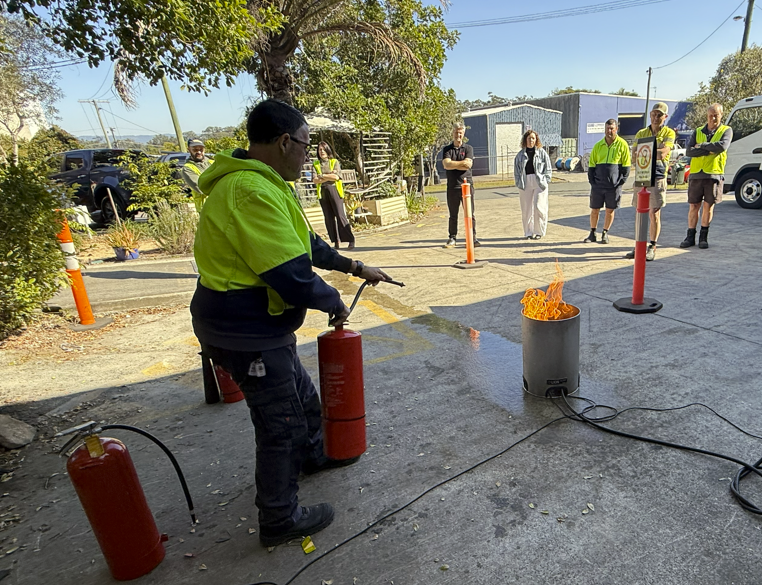
First Response Fire Training (Extinguishers & Fire Blankets) Within 1 month of commencing work, then every 2 years
Emergency Warden (ECO) Training Every 6 months
This schedule exceeds the minimum legislative requirements by ensuring workers remain competent and confident in responding to workplace emergencies. It also demonstrates that the PCBU has taken reasonably practicable steps to meet its duty of care under the Work Health and Safety Act 2011 (Qld) and Regulation 43 of the Work Health and Safety Regulation 2011 (Qld).
WHS Legislative Requirements
Work Health and Safety Act 2011 (Qld)
Section 19 – Primary Duty of Care
A person conducting a business or undertaking (PCBU) must ensure, so far as is reasonably practicable, the health and safety of workers and other persons. This includes providing:
Safe systems of work.
Information, training, instruction and supervision necessary to protect workers from risks to health and safety.
Fire and emergency response training forms part of this duty where a fire emergency is a foreseeable risk.
Work Health and Safety Regulation 2011 (Qld)
Part 3.2 – General Workplace Management
Regulation 43 – Duty to prepare, maintain and implement emergency plan
A PCBU must ensure that an emergency plan is prepared for the workplace, taking into account:
The nature of the work being carried out.
The hazards at the workplace.
The size and location of the workplace.
The number and composition of workers and other persons.
The emergency plan must include procedures for:
Emergency response.
Evacuation procedures.
Notifying emergency services.
Medical treatment and assistance.
Effective communication during an emergency.
Testing of emergency procedures, including the frequency of testing.
Information, training and instruction relevant to implementing the emergency procedures.
Australian Standard AS 3745:2010
Although AS 3745 is not legislation, it is recognised as the accepted benchmark for emergency planning and is referenced throughout the Building Fire Safety Regulation 2008 (Qld).
AS 3745 recommends:
Regular emergency response training for occupants.
Training for members of the Emergency Control Organisation (ECO).
Practical evacuation exercises at appropriate intervals (commonly annually).
Review of emergency procedures following drills or actual emergencies.
Maintenance of records for training and evacuation exercises.
Building Fire Safety Regulation 2008 (Qld)
For buildings captured by the Regulation (such as many commercial buildings, high-rise residential buildings and other prescribed occupancies), additional obligations apply, including:
Appointment of a Fire Safety Adviser where required.
Preparation and implementation of a Fire and Evacuation Plan.
Annual instruction of evacuation coordinators and prescribed persons.
Conducting and recording evacuation exercises in accordance with the Regulation.
Practical Employer Obligations
To meet WHS obligations, employers should ensure that:
Workers receive emergency and evacuation training during induction.
Refresher training is provided periodically and whenever procedures change.
Fire wardens or Emergency Control Organisation members receive role-specific training.
Evacuation drills are conducted and documented at appropriate intervals.
Emergency procedures are reviewed after drills or actual incidents.
Training records and evacuation exercise records are retained.
References
Work Health and Safety Act 2011 (Qld) – Section 19.
Work Health and Safety Regulation 2011 (Qld) – Regulation 43 (Emergency Plans).
Building Fire Safety Regulation 2008 (Qld) – Fire and Evacuation Plans, Fire Safety Advisers and Occupier obligations.
AS 3745:2010 – Planning for Emergencies in Facilities.
For most workplaces, providing documented fire and emergency training, together with periodic evacuation exercises, is considered an important part of demonstrating compliance with both WHS duties and accepted emergency management practice.